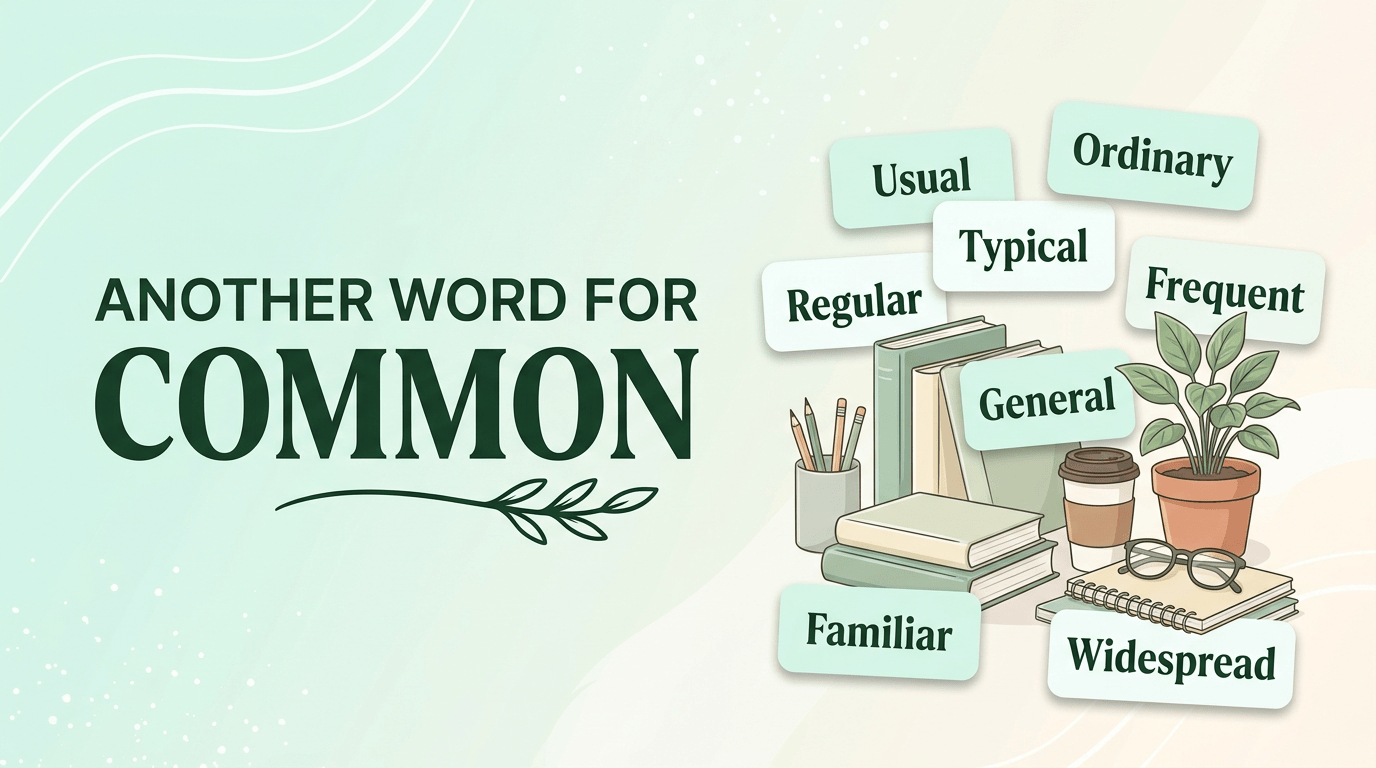
Common can mean usual, ordinary, frequent, widespread, shared, or familiar. The best alternative depends on the context.
The word common is used often in everyday English. It can describe something that happens frequently, something many people share, or something that is ordinary and easy to find. Because it has several meanings, choosing another word can make your writing clearer and more precise. For example, usual works well for something that normally happens, while widespread is better for something found in many places. English learners, students, and content writers can improve their vocabulary by learning these useful alternatives. In this guide, you will learn the meaning, pronunciation, etymology, related word forms, and 24 alternatives for common, with simple examples and explanations.
Meaning of Common
Definition and Part of Speech
Common is mainly an adjective. It can mean something that is usual, frequent, widespread, ordinary, or shared by several people.
Examples:
- It is common to feel nervous before an exam.
- Roses are common flowers in many gardens.
Connotative Meaning
A connotation is the feeling or idea a word suggests beyond its basic meaning.
| Connotation | Meaning |
| Positive | Familiar, shared, or widely accepted |
| Negative | Ordinary, low-quality, or unremarkable |
| Neutral | Usual, frequent, or widespread |
Etymology of Common
The word common came into English through Old French comun, from Latin communis, meaning “shared” or “common.”
- Old English: Related ideas were expressed with native words such as gemǣne, meaning shared or common.
- Middle English: Forms such as comun became established through French influence.
- Modern English: Common developed its modern meanings, including usual, widespread, ordinary, and shared.
Pronunciation of Common
Common: /ˈkɒmən/ in British English and /ˈkɑːmən/ in American English.
Syllables: com-mon
Stress: First syllable
Affixation Pattern
Common does not normally use a productive prefix or suffix in its basic form.
Related forms include:
- Common — adjective
- Commonly — adverb
- Commonness — noun
- Uncommon — adjective meaning not usual or rare
- Commonality — noun meaning a shared feature
24 Other Words for Common With Meaning & Examples
1. Usual
Part of speech: Adjective
Meaning: Something that normally happens or is expected.
- She arrived at her usual time.
- This is the usual method for solving the problem.
2. Ordinary
Part of speech: Adjective
Meaning: Normal and not especially unusual or special.
- It looked like an ordinary house.
- He wanted a simple, ordinary life.
3. Frequent
Part of speech: Adjective
Meaning: Happening often.
- Frequent practice improves your skills.
- The city has frequent rain during this season.
4. Widespread
Part of speech: Adjective
Meaning: Existing or happening in many places or among many people.
- The use of smartphones is widespread.
- The news caused widespread concern.
5. Prevalent
Part of speech: Adjective
Meaning: Common or widespread within a particular place or group.
- This tradition is prevalent in the region.
- The problem is prevalent among young learners.
6. Typical
Part of speech: Adjective
Meaning: Having the usual qualities of a person, group, or situation.
- That is typical behavior for the species.
- It was a typical summer afternoon.
7. Familiar
Part of speech: Adjective
Meaning: Well known because you have seen, heard, or experienced it before.
- Her face looked familiar.
- The song has a familiar melody.
8. Popular
Part of speech: Adjective
Meaning: Liked, accepted, or used by many people.
- Football is popular around the world.
- This restaurant is popular with students.
9. Conventional
Part of speech: Adjective
Meaning: Following commonly accepted traditions or practices.
- They chose a conventional design.
- He prefers conventional teaching methods.
10. Routine
Part of speech: Adjective
Meaning: Regular and repeated as part of normal activity.
- The doctor performed a routine check.
- It was a routine school day.
11. Standard
Part of speech: Adjective
Meaning: Normally accepted or used as a typical level or form.
- This is the standard procedure.
- The package includes standard features.
12. General
Part of speech: Adjective
Meaning: Relating to many people, things, or situations rather than something specific.
- There is a general understanding of the issue.
- The teacher gave some general advice.
13. Ordinary
Part of speech: Adjective
Meaning: Not special, rare, or extraordinary.
- The village seemed ordinary at first.
- It was an ordinary afternoon.
14. Everyday
Part of speech: Adjective
Meaning: Normal and happening as part of daily life.
- These are useful everyday expressions.
- She wears comfortable clothes for everyday activities.
15. Regular
Part of speech: Adjective
Meaning: Happening repeatedly or occurring in a normal pattern.
- He is a regular customer.
- Exercise should become a regular habit.
16. Typical
Part of speech: Adjective
Meaning: Normal for a particular person, place, or situation.
- This weather is typical for winter.
- That is typical of his writing style.
17. Numerous
Part of speech: Adjective
Meaning: Existing in large numbers.
- Numerous examples support the idea.
- The museum has numerous historical objects.
18. Abundant
Part of speech: Adjective
Meaning: Existing in large quantities or amounts.
- Fresh water is abundant in this region.
- The area has abundant natural resources.
19. Plentiful
Part of speech: Adjective
Meaning: Available in large amounts or numbers.
- Food was plentiful at the celebration.
- Fish are plentiful in the lake.
20. Shared
Part of speech: Adjective
Meaning: Belonging to or experienced by more than one person.
- They have a shared interest in music.
- The two groups have shared goals.
21. Universal
Part of speech: Adjective
Meaning: Existing or applying everywhere or to everyone.
- Music has a universal appeal.
- The need for safety is nearly universal.
22. Mundane
Part of speech: Adjective
Meaning: Ordinary and sometimes lacking excitement.
- He was tired of his mundane routine.
- Even mundane tasks can be useful.
23. Run-of-the-mill
Part of speech: Adjective phrase
Meaning: Very ordinary and not special.
- It was a run-of-the-mill restaurant.
- The movie was entertaining but fairly run-of-the-mill.
24. Average
Part of speech: Adjective
Meaning: Typical or ordinary when compared with others.
- The student received an average score.
- It was an average day at work.
Note: These alternatives are not always interchangeable. Frequent describes how often something happens, widespread describes how broadly something exists, shared means experienced by multiple people, and ordinary emphasizes a lack of special qualities.
Prototype Meaning
The prototype meaning of common is something that is usual, familiar, or found often among many people or places.
For example:
“Rain is common in this area.”
Here, common means that rain happens often in that particular area.
Prototype Categorization
| Category | Alternatives |
| Usual or normal | Usual, ordinary, typical, routine |
| Frequent | Frequent, regular |
| Widespread | Widespread, prevalent, universal |
| Familiar | Familiar, everyday |
| Popular | Popular, conventional |
| Large quantity | Numerous, abundant, plentiful |
| Shared | Shared, general |
| Ordinary or unremarkable | Mundane, run-of-the-mill, average |
This grouping helps you choose a synonym based on the exact meaning you want instead of replacing common with a random alternative.
Antonyms of Common
Rare
Part of speech: Adjective
Meaning: Not found or happening often.
- Snow is rare in this region.
Unusual
Part of speech: Adjective
Meaning: Different from what normally happens.
- She noticed an unusual pattern.
Uncommon
Part of speech: Adjective
Meaning: Not frequently seen or experienced.
- This bird is uncommon in the area.
Exceptional
Part of speech: Adjective
Meaning: Much better or different from what is normal.
- She showed exceptional talent.
Unique
Part of speech: Adjective
Meaning: Unlike anything else.
- Each piece has a unique design.
Short Questions and Answers
What is another word for common?
Usual, ordinary, typical, frequent, and widespread are common alternatives.
What is a synonym for common in English?
Depending on the context, usual, frequent, widespread, familiar, or ordinary can work.
What is a formal word for common?
Prevalent and widespread can sound more formal.
What is another word for common people?
Depending on the meaning, ordinary people, the general public, or the general population may work.
What is the opposite of common?
Common opposites include rare, unusual, uncommon, unique, and exceptional.
Is “frequent” the same as “common”?
Not always. Frequent focuses on how often something happens, while common can also mean widespread, usual, or shared.
Conclusion
Learning alternatives for common can make your English more precise and interesting. Instead of using the same word repeatedly, you can choose usual for something normal, frequent for something that happens often, widespread for something found in many places, or ordinary for something that is not special. Words such as familiar, prevalent, typical, regular, and shared can also fit specific situations. The key is to consider the exact meaning before choosing a synonym. Practice using these words in your schoolwork, conversations, emails, and creative writing. With regular practice, your vocabulary will become more flexible, natural, and confident.

I’m Naz Fatima, a dedicated content writer with expertise in language, synonyms, and well-researched article writing.
My experience in creating clear, engaging, and informative content reflects my commitment to quality, accuracy, and reader value.










