| Quick Question | Answer |
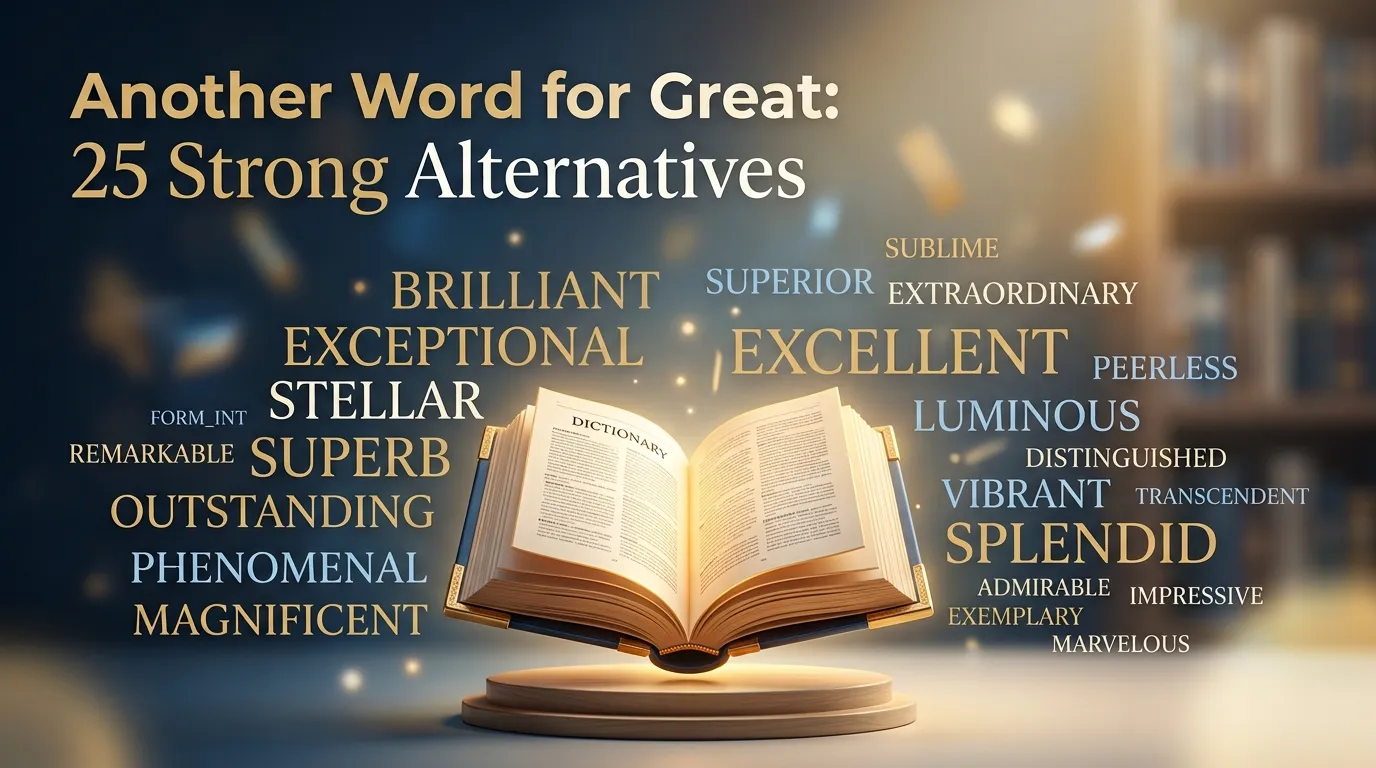
| Another word for great? | Excellent, amazing, wonderful, fantastic, outstanding, superb, remarkable, impressive, exceptional, magnificent |
| Best word for great in formal writing? | Excellent, outstanding, exceptional, remarkable, or impressive |
| Another word for great person? | Wonderful, admirable, exceptional, remarkable, or outstanding |
| Another word for great job? | Excellent, outstanding, impressive, superb, or fantastic |
The word great is one of the most common positive words in English. We use it when something is very good, impressive, enjoyable, or important. For example, imagine a friend helps you with a difficult task. You might smile and say, “You did a great job!” The word is simple and useful, but using it too often can make your writing sound repetitive.
Learning another word for great gives you more ways to express exactly what you mean. An English learner may use excellent for high quality, amazing for something surprising, or outstanding for something that stands above others. In this guide, we will explore the meaning, grammar, history, pronunciation, word formation, and 25 useful alternatives to great, with clear examples and semantic categories.
Meaning of Great
Definition
Great (Adjective):
Something that is great is very good, impressive, enjoyable, important, large, or powerful, depending on the context.
The meaning of great changes with the sentence. It can describe quality, size, importance, ability, or enjoyment.
Examples
- We had a great time at the restaurant.
- She is a great teacher who helps every student.
Connotative Meaning
Connotation means the feeling or idea that a word suggests beyond its basic meaning.
- Positive tone: Great usually suggests praise, quality, success, happiness, or admiration.
- Negative tone: In some contexts, great can be used sarcastically, such as “Great, now we have another problem.”
- Neutral tone: Great can describe large size, importance, or historical status without strong emotion.
Etymology
The history of great goes back to Old English and related Germanic languages.
- Old English (450–1100): The word came from Old English grēat, meaning large, thick, coarse, or big.
- Middle English (1100–1500): The spelling and pronunciation changed over time, while the meanings expanded to include importance, power, and high rank.
- Modern English (1500–Present): Great developed many modern meanings, including excellent, remarkable, important, successful, and very large.
The word is related to similar Germanic words, including German groß, meaning “large” or “great.”
Pronunciation (IPA)
- IPA: /ɡreɪt/
- Syllables: great
Affixation Pattern of Great
- Root: great
- Prefix: None
- Suffix: None
- Basic form: great
Word Formations
- great — adjective
- greatness — noun
- greatly — adverb
- greater — comparative adjective
- greatest — superlative adjective
25 Other Words for Great With Meaning & Examples
1. Excellent (Adjective)
Meaning: Extremely good in quality or performance.
Examples:
- She did an excellent job on the project.
- The restaurant serves excellent food.
2. Amazing (Adjective)
Meaning: Very surprising, impressive, or enjoyable.
Examples:
- We had an amazing experience.
- The view from the mountain was amazing.
3. Wonderful (Adjective)
Meaning: Very enjoyable, pleasing, or good.
Examples:
- We had a wonderful evening together.
- She gave me some wonderful advice.
4. Fantastic (Adjective)
Meaning: Extremely good or exciting.
Examples:
- You gave a fantastic presentation.
- We had a fantastic weekend.
5. Outstanding (Adjective)
Meaning: Much better than usual or better than others.
Examples:
- He received an award for outstanding performance.
- Her work was outstanding.
6. Superb (Adjective)
Meaning: Extremely good or of very high quality.
Examples:
- The hotel provided superb service.
- The chef prepared a superb meal.
7. Remarkable (Adjective)
Meaning: Unusual or impressive enough to deserve attention.
Examples:
- She made a remarkable recovery.
- His progress has been remarkable.
8. Impressive (Adjective)
Meaning: Causing admiration because of quality, skill, or achievement.
Examples:
- Her presentation was very impressive.
- He has an impressive collection of books.
9. Exceptional (Adjective)
Meaning: Much better than normal or unusually good.
Examples:
- The student showed exceptional talent.
- The company provides exceptional customer service.
10. Magnificent (Adjective)
Meaning: Extremely beautiful, impressive, or grand.
Examples:
- We saw a magnificent palace.
- The sunset looked magnificent.
11. Brilliant (Adjective)
Meaning: Extremely clever, successful, or impressive.
Examples:
- That was a brilliant idea.
- She gave a brilliant performance.
12. Superb (Adjective)
Meaning: Exceptionally good or excellent.
Examples:
- The movie had superb acting.
- His cooking skills are superb.
13. Terrific (Adjective)
Meaning: Very good, enjoyable, or exciting.
Examples:
- We had a terrific time at the concert.
- She is a terrific coach.
14. Splendid (Adjective)
Meaning: Excellent, impressive, or very attractive.
Examples:
- You did a splendid job.
- The garden looked splendid in spring.
15. Phenomenal (Adjective)
Meaning: Extremely impressive or unusually successful.
Examples:
- The athlete had a phenomenal season.
- Sales showed phenomenal growth.
16. Marvelous (Adjective)
Meaning: Extremely good, enjoyable, or impressive.
Examples:
- They had a marvelous vacation.
- What a marvelous idea!
17. Fabulous (Adjective)
Meaning: Extremely good, attractive, or enjoyable.
Examples:
- She looked fabulous in her new dress.
- We had a fabulous dinner.
18. First-rate (Adjective)
Meaning: Of the highest quality.
Examples:
- The hotel offers first-rate service.
- He is a first-rate professional.
19. Top-notch (Adjective)
Meaning: Excellent and of very high quality.
Examples:
- The school provides top-notch education.
- We received top-notch service.
20. Admirable (Adjective)
Meaning: Deserving respect or approval because of good qualities or actions.
Examples:
- Her dedication to her students is admirable.
- His honesty is admirable.
21. Glorious (Adjective)
Meaning: Extremely beautiful, successful, or joyful.
Examples:
- It was a glorious summer morning.
- The team celebrated a glorious victory.
22. Accomplished (Adjective)
Meaning: Highly skilled or successful in a particular area.
Examples:
- She is an accomplished musician.
- He is an accomplished writer.
23. Notable (Adjective)
Meaning: Worthy of attention because of importance, quality, or achievement.
Examples:
- She made a notable contribution to the project.
- The book contains several notable ideas.
24. Enjoyable (Adjective)
Meaning: Giving pleasure or making an experience pleasant.
Examples:
- We had an enjoyable conversation.
- The class was both useful and enjoyable.
25. Spectacular (Adjective)
Meaning: Very impressive, exciting, or beautiful.
Examples:
- The fireworks were spectacular.
- We watched a spectacular sunset.
Prototype Meaning
The most typical meaning of great is very good or impressive. When someone says, “That was great,” they usually mean that something was enjoyable, successful, or pleasing. However, great is a flexible word. It can also mean large in size, important in status, powerful, or highly skilled. The surrounding words and situation tell us which meaning is intended.
Prototype Categorization
The 25 alternatives for great can be divided into useful semantic groups.
- High quality: excellent, superb, outstanding, first-rate, top-notch describe something that performs or looks very well.
- Strong praise: amazing, fantastic, wonderful, terrific, fabulous, marvelous are common in everyday speech and show strong positive feelings.
- Exceptional ability or achievement: remarkable, exceptional, impressive, phenomenal, brilliant, accomplished work well when praising skill, success, or achievement.
- Beauty and grandeur: magnificent, splendid, glorious, spectacular are useful for beautiful, impressive, or grand things.
- Respect and value: admirable, notable focus on qualities, actions, importance, or achievements.
- Pleasure: enjoyable is useful when the main idea is that an experience gives pleasure.
These categories help writers select a word based on the exact meaning they want to express instead of replacing great with any synonym at random.
Antonyms of Great
Poor (Adjective)
Low in quality or not good.
Terrible (Adjective)
Very bad or unpleasant.
Ordinary (Adjective)
Normal and not special or unusual.
Inferior (Adjective)
Lower in quality, value, or importance.
Insignificant (Adjective)
Too small or unimportant to have much effect.
Minor (Adjective)
Less important, serious, or noticeable than something else.
Mediocre (Adjective)
Only average and not especially good.
Unimpressive (Adjective)
Not causing admiration or interest.
Short Questions and Answers
What does great mean?
Great usually means very good, impressive, enjoyable, or successful. It can also mean large, important, or powerful depending on context.
When should great be used?
Use great in everyday English when you want to give positive praise or describe something as very good. It is common in conversations, emails, reviews, and casual writing.
Is great positive or negative?
Great is usually positive. However, it can sometimes be used sarcastically to express annoyance, as in “Great, now we’re late.”
What is another word for great in formal writing?
Words such as excellent, outstanding, exceptional, remarkable, and significant may work well in formal writing, depending on the intended meaning.
What is another word for great job?
You can say excellent job, outstanding work, fantastic work, superb work, or impressive work.
What is another word for great person?
Depending on the meaning, you can use wonderful, admirable, exceptional, remarkable, or outstanding.
Another Word for Important: 30 Useful Alternatives
Conclusion
Knowing another word for great can make your English more precise and interesting. Instead of using the same word in every sentence, you can choose excellent for high quality, amazing for something surprising, outstanding for exceptional performance, or spectacular for something visually impressive. Each alternative carries a slightly different meaning or tone.
A stronger vocabulary can help English learners speak with more confidence and help writers create clearer, less repetitive content. The key is not to replace great automatically. First, think about what you really want to say. Then choose the word that best matches the situation. Practicing a few new alternatives each day is a simple way to build better English vocabulary.

Hi, I’m Anaya. Words that look almost identical but mean completely different things have always fascinated me, that’s what pulled me toward writing about spelling and usage. I focus on digging into where these mix-ups actually come from, whether it’s a British-American split or just a rule English never bothered to make consistent. My goal with every guide is simple: give you the answer fast, then explain it well enough that you never have to look it up again.