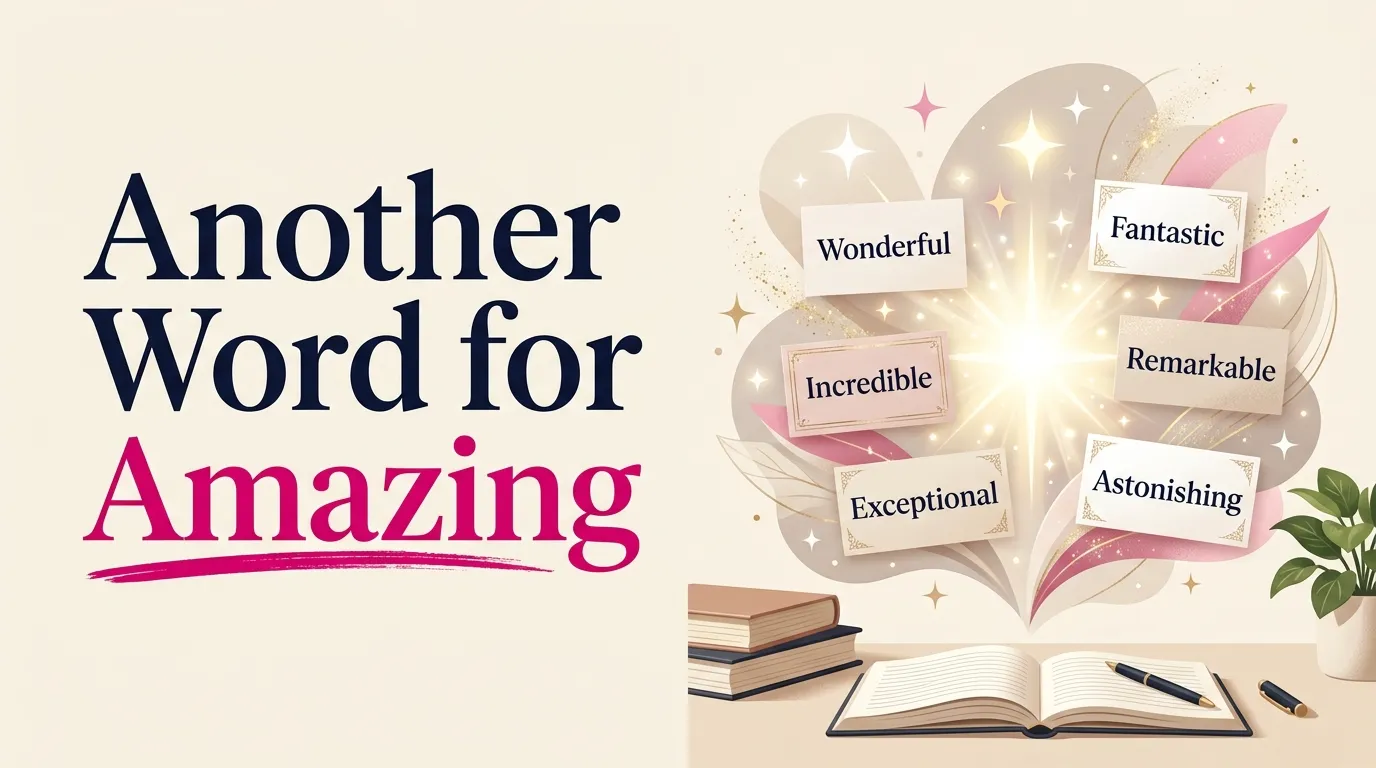
Some useful alternatives to amazing are wonderful, incredible, astonishing, remarkable, impressive, fantastic, extraordinary, marvelous, spectacular, and stunning.
Amazing is a common English word that means something is very surprising, very good, or impressive. Imagine visiting a beautiful place for the first time. You might say, “The view is amazing!” We use this word often because it is simple, strong, and useful in daily conversation. Cambridge defines amazing as something extremely surprising and also as something very good in informal English.
However, using the same word again and again can make writing sound dull. Learning another word for amazing helps English learners build stronger vocabulary and helps content writers make their sentences more interesting.
Meaning of Amazing
Definition
Amazing (Adjective):
Something that is extremely surprising, impressive, or very good.
Examples
- The view from the mountain was amazing.
- She gave an amazing performance at the school event.
Connotative Meaning
Connotation means the feeling or idea that a word suggests beyond its basic meaning.
- Positive tone: Amazing often shows strong praise, excitement, or admiration.
- Negative tone: It can sometimes describe something shocking or unpleasant, depending on context.
- Neutral tone: It can simply describe something that causes strong surprise.
Etymology
The word amazing comes from the verb amaze, with the -ing ending. Amaze has roots in Middle English and is connected with an older English word meaning to confuse, bewilder, or cause great surprise.
- Old English (450–1100): The older form is linked to amasian, meaning to confuse, bewilder, or stupefy.
- Middle English (1100–1500): Forms such as amasen and amazen developed and were used for causing wonder or confusion.
- Modern English (1500–Present): Amaze developed its modern sense of causing great surprise or wonder. Amazing became the common adjective used to describe something extremely surprising or very good.
Pronunciation (IPA)
- IPA: /əˈmeɪ.zɪŋ/
- Syllables: a-ma-zing
Cambridge gives the same IPA pronunciation for both British and American English.
Affixation Pattern of amazing
- Root/Base: amaze
- Prefix: None
- Suffix: -ing
- Word formations:
- amaze: verb
- amazed: adjective
- amazing: adjective
- amazement: noun
- amazingly: adverb
- amazer: noun, a person or thing that amazes
30 Other Words With Meaning & Examples
1. Wonderful (Adjective)
Meaning: Very good, enjoyable, or pleasing.
Examples:
- We had a wonderful time at the beach.
- She gave me a wonderful gift.
2. Incredible (Adjective)
Meaning: Extremely impressive or difficult to believe.
Examples:
- The athlete showed incredible strength.
- It was an incredible experience.
3. Astonishing (Adjective)
Meaning: Very surprising or unexpected.
Examples:
- The magician performed an astonishing trick.
- Her progress was astonishing.
4. Remarkable (Adjective)
Meaning: Unusual or impressive enough to deserve attention.
Examples:
- She made remarkable progress in English.
- The building has a remarkable design.
5. Impressive (Adjective)
Meaning: Causing admiration because of quality, skill, or size.
Examples:
- His presentation was very impressive.
- The museum has an impressive collection.
6. Fantastic (Adjective)
Meaning: Extremely good, enjoyable, or exciting.
Examples:
- We had a fantastic weekend.
- Your idea sounds fantastic.
7. Extraordinary (Adjective)
Meaning: Very unusual, special, or far beyond what is normal.
Examples:
- She showed extraordinary talent.
- The story describes an extraordinary journey.
8. Marvelous (Adjective)
Meaning: Extremely good, enjoyable, or impressive.
Examples:
- The chef prepared a marvelous meal.
- We enjoyed the marvelous scenery.
9. Spectacular (Adjective)
Meaning: Very impressive or beautiful to watch.
Examples:
- The fireworks were spectacular.
- We saw a spectacular sunset.
10. Stunning (Adjective)
Meaning: Extremely impressive or beautiful.
Examples:
- She wore a stunning dress.
- The hotel has a stunning view.
11. Phenomenal (Adjective)
Meaning: Extremely impressive or unusually successful.
Examples:
- The singer gave a phenomenal performance.
- The company experienced phenomenal growth.
12. Magnificent (Adjective)
Meaning: Very beautiful, grand, or impressive.
Examples:
- The palace looked magnificent.
- We enjoyed the magnificent view.
13. Superb (Adjective)
Meaning: Extremely good in quality.
Examples:
- The restaurant provides superb service.
- Her writing skills are superb.
14. Brilliant (Adjective)
Meaning: Extremely good, clever, or impressive.
Examples:
- That was a brilliant idea.
- He gave a brilliant answer.
15. Excellent (Adjective)
Meaning: Extremely good or of very high quality.
Examples:
- She did an excellent job.
- The hotel received excellent reviews.
16. Fabulous (Adjective)
Meaning: Very good, attractive, or enjoyable.
Examples:
- We had a fabulous dinner.
- Your new design looks fabulous.
17. Terrific (Adjective)
Meaning: Very good or enjoyable.
Examples:
- We had a terrific day.
- That was a terrific performance.
18. Spectacularly Good (Adverbial Phrase)
Meaning: Extremely good in a way that attracts attention.
Examples:
- The project turned out spectacularly good.
- Her performance was spectacularly good.
19. Breathtaking (Adjective)
Meaning: So beautiful or impressive that it creates a strong feeling of wonder.
Examples:
- The mountain view was breathtaking.
- They watched a breathtaking sunset.
20. Extraordinary (Adjective)
Meaning: Far more impressive or unusual than normal.
Examples:
- The artist has extraordinary skill.
- It was an extraordinary achievement.
21. Astounding (Adjective)
Meaning: Extremely surprising or impressive.
Examples:
- The results were astounding.
- She achieved astounding success.
22. Awesome (Adjective)
Meaning: Extremely good, impressive, or exciting, especially in informal English.
Examples:
- That concert was awesome.
- You did an awesome job.
23. Wonderful (Adjective)
Meaning: Very pleasant, good, or enjoyable.
Examples:
- It was a wonderful surprise.
- They enjoyed a wonderful holiday.
24. Unbelievable (Adjective)
Meaning: So surprising or impressive that it seems difficult to believe.
Examples:
- The final result was unbelievable.
- She showed unbelievable determination.
25. Miraculous (Adjective)
Meaning: Extremely surprising and seeming almost impossible.
Examples:
- The recovery was described as miraculous.
- It was a miraculous escape from danger.
26. Mind-Blowing (Adjective)
Meaning: Extremely surprising, exciting, or impressive.
Examples:
- The movie had a mind-blowing ending.
- The technology is mind-blowing.
27. Striking (Adjective)
Meaning: Very noticeable or impressive.
Examples:
- The building has a striking design.
- There was a striking difference between the two images.
28. Exceptional (Adjective)
Meaning: Much better than usual.
Examples:
- She has exceptional writing skills.
- The restaurant offers exceptional service.
29. Phenomenal (Adjective)
Meaning: Extremely impressive, successful, or remarkable.
Examples:
- His performance was phenomenal.
- The product received phenomenal attention.
30. Awe-Inspiring (Adjective)
Meaning: Creating a strong feeling of wonder and admiration.
Examples:
- The view from the peak was awe-inspiring.
- The ancient building was truly awe-inspiring.
Prototype Meaning
The most typical meaning of amazing is something that makes a person feel strong surprise, excitement, or admiration. When people hear amazing, they often imagine something unusually good, beautiful, impressive, or unexpected. For example, an amazing view may be beautiful enough to make someone stop and look, while an amazing performance may show an unusually high level of skill.
Prototype Categorization
The 30 alternatives can be divided into useful meaning groups. This helps writers select a word that matches the exact feeling they want to express.
- General praise: wonderful, fantastic, marvelous, fabulous, terrific, excellent, and superb are useful when you simply want to say that something is very good.
- Strong surprise: astonishing, astounding, incredible, unbelievable, and phenomenal work well when something creates strong surprise.
- Beauty and visual impact: stunning, spectacular, magnificent, breathtaking, and striking are useful for places, designs, photographs, views, and appearances.
- Skill and achievement: impressive, remarkable, exceptional, brilliant, and extraordinary are useful for people, work, talent, and accomplishments.
- Excitement and informal speech: awesome and mind-blowing are more casual choices and work well in conversations, reviews, and informal content.
- Wonder and deep admiration: awe-inspiring and miraculous suggest a stronger emotional reaction.
This categorization helps writers avoid using one synonym everywhere. The best alternative depends on the subject, audience, tone, and exact meaning.
Antonyms of Amazing
1. Ordinary (Adjective)
Meaning: Normal and not unusual.
2. Unimpressive (Adjective)
Meaning: Not interesting, exciting, or impressive.
3. Disappointing (Adjective)
Meaning: Not as good as expected.
4. Dull (Adjective)
Meaning: Not interesting or exciting.
5. Mediocre (Adjective)
Meaning: Average and not especially good.
6. Terrible (Adjective)
Meaning: Very bad or unpleasant.
7. Awful (Adjective)
Meaning: Very bad or unpleasant.
8. Boring (Adjective)
Meaning: Not interesting or exciting.
Short Questions and Answers
What does amazing mean?
Amazing means extremely surprising, impressive, or very good.
When should amazing be used?
Use amazing when you want to express strong praise, excitement, surprise, or admiration.
Is amazing positive or negative?
Amazing is usually positive when it means “very good” or “very impressive.” It can also describe something that is simply very surprising, depending on context.
How is amazing different from similar words?
The alternatives have slightly different meanings. Stunning often focuses on beauty, astonishing focuses on surprise, impressive focuses on admiration, and excellent focuses on high quality. Choosing the right word makes your writing more precise.
Conclusion
Learning another word for amazing is a simple way to make your English stronger. Words such as wonderful, incredible, remarkable, impressive, and spectacular can express different shades of praise, surprise, beauty, and admiration. Using these alternatives can improve vocabulary and make both speaking and writing more natural.English learners can also use these words to sound more confident and express ideas with greater detail. Try learning a few new alternatives each day and use them in your own sentences. Regular practice will make these words easier to remember and use naturally.
Another Word for Very: 25 Powerful Alternatives

I’m Mubashra Waleed, a content writer specializing in English vocabulary, synonyms, word meanings. I focus on creating clear, accurate, and engaging content that makes English language learning simple and useful for readers.










