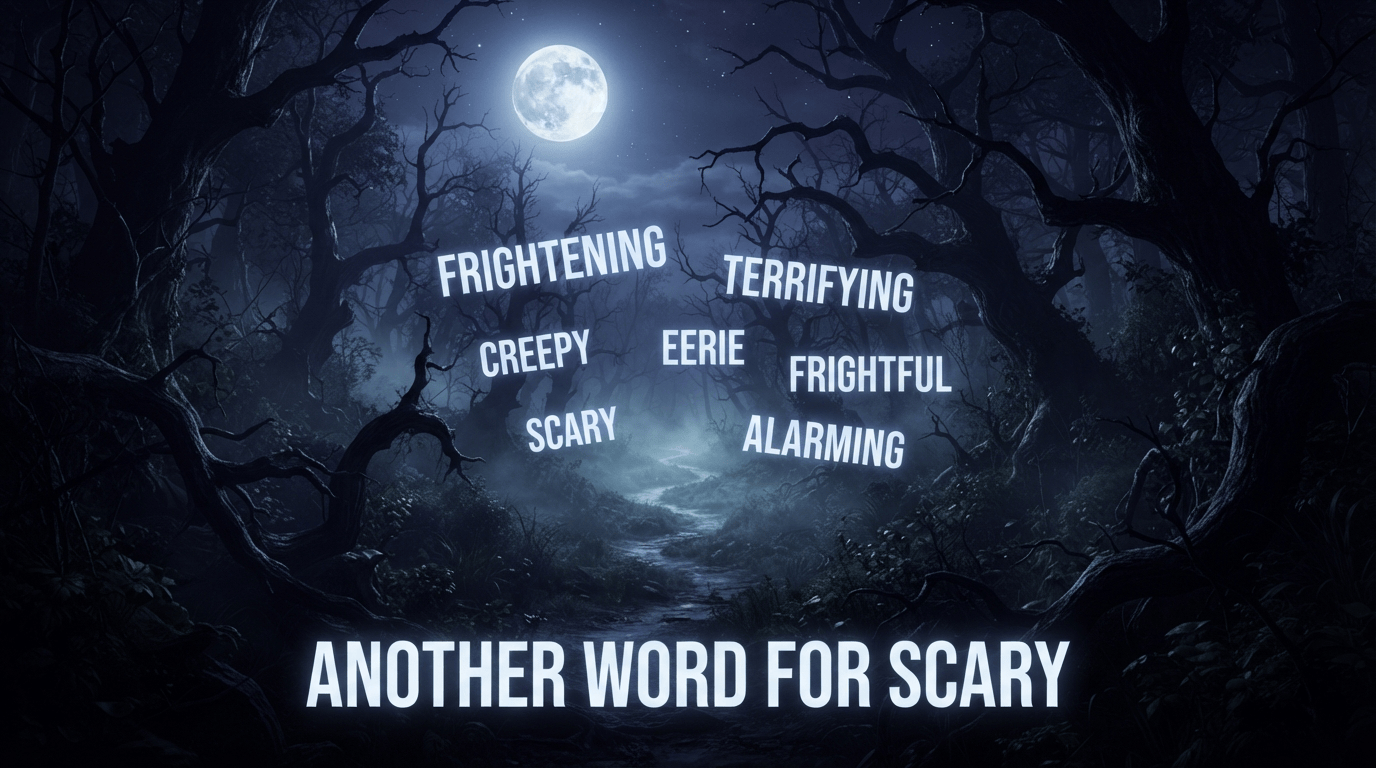
Another word for scary can be frightening, terrifying, frighteningly intense, creepy, alarming, eerie, horrifying, or menacing, depending on the context.
The word scary describes something that causes fear, worry, or a feeling of danger. It is a common adjective used in everyday English, especially when talking about movies, stories, places, experiences, or situations. For example, you might say, “That movie was scary” or “Walking alone in the dark can be scary.” While scary is simple and useful, using different words can make your writing more vivid and precise.
ESL learners, students, and content writers can choose alternatives such as frightening, terrifying, creepy, eerie, alarming, horrifying, and menacing to describe different levels or types of fear. This article explains the meaning, examples, connotation, history, pronunciation, word formation, semantic categories, antonyms, and useful alternatives for scary.
Meaning of Scary
Definition and Part of Speech
Scary is an adjective. It means causing fear, making someone feel frightened, or creating a sense of danger.
Examples:
- That horror movie was really scary.
- The dark forest looked scary at night.
Connotative Meaning
Connotation means the feeling or idea connected with a word beyond its basic dictionary meaning.
| Type | Connotation of “Scary” |
|---|---|
| Positive | Can describe exciting fear in entertainment |
| Negative | Fear, danger, threat, or anxiety |
| Neutral | Something that causes fear |
The word usually has a negative emotional meaning, although it can describe enjoyable fear in movies, games, or stories.
Etymology of Scary
The word scary developed from scare with the adjective-forming suffix -y. Scare has roots in Old Norse and related Germanic words connected with frightening or causing fear. The adjective scary became common in English during the 19th century.
Old English
The modern word scary does not come directly from an Old English adjective. However, its wider Germanic history is connected to older words describing fear and fright.
Middle English
English developed several words related to frightening or frightening experiences during the Middle English period, influenced by Germanic vocabulary.
Modern English
In modern English, scary is a common informal adjective for something that causes fear or makes a person feel frightened.
Pronunciation of Scary
IPA: /ˈskeəri/ UK
IPA: /ˈsker.i/ US
Syllables: scar-y
The main stress falls on the first syllable.
Affixation Pattern of Scary
Scary is formed from the verb scare with the suffix -y.
| Word | Formation | Grammatical Category |
|---|---|---|
| scare | Base word | Verb / Noun |
| scary | scare + -y | Adjective |
| scarier | scary + -er | Comparative adjective |
| scariest | scary + -est | Superlative adjective |
| scared | scare + -ed | Adjective / Verb form |
| scarily | scary + -ly | Adverb |
The suffix -y often forms adjectives that mean “having the quality of” or “causing.”
25 Other Words for Scary With Meaning & Examples
1.Frightening
Part of speech: Adjective
Meaning: Causing fear or making someone feel afraid.
- The sound was frightening.
- We watched a frightening movie.
2. Terrifying
Part of speech: Adjective
Meaning: Causing a very strong feeling of fear.
- The storm was terrifying.
- It was a terrifying experience.
3. Frightful
Part of speech: Adjective
Meaning: Very frightening or unpleasant.
- They heard a frightful noise.
- The abandoned house had a frightful atmosphere.
4. Horrifying
Part of speech: Adjective
Meaning: Extremely shocking or frightening.
- The story was horrifying.
- It was a horrifying sight.
5. Creepy
Part of speech: Adjective
Meaning: Causing an uncomfortable feeling of fear or unease.
- That old house looks creepy.
- The movie had a creepy atmosphere.
6. Eerie
Part of speech: Adjective
Meaning: Strange, mysterious, and slightly frightening.
- The empty street felt eerie.
- An eerie sound came from the forest.
7. Alarming
Part of speech: Adjective
Meaning: Causing worry, fear, or concern.
- The news was alarming.
- The sudden change was alarming.
8. Menacing
Part of speech: Adjective
Meaning: Suggesting danger or a possible threat.
- A menacing figure stood nearby.
- The dark clouds looked menacing.
9. Chilling
Part of speech: Adjective
Meaning: Causing a strong feeling of fear or discomfort.
- It was a chilling story.
- We heard a chilling sound.
10. Hair-Raising
Part of speech: Adjective
Meaning: Extremely frightening or exciting.
- It was a hair-raising experience.
- The ride was absolutely hair-raising.
11. Spine-Chilling
Part of speech: Adjective
Meaning: Extremely frightening or disturbing.
- The film had a spine-chilling ending.
- We heard a spine-chilling scream in the movie.
12. Petrifying
Part of speech: Adjective
Meaning: Extremely frightening.
- The experience was petrifying.
- The sudden noise was petrifying.
13. Intimidating
Part of speech: Adjective
Meaning: Making someone feel nervous, afraid, or less confident.
- The huge building looked intimidating.
- The interview process seemed intimidating.
14. Daunting
Part of speech: Adjective
Meaning: Making something seem difficult, worrying, or frightening.
- The challenge looked daunting.
- Starting a new school can feel daunting.
15. Ominous
Part of speech: Adjective
Meaning: Suggesting that something bad may happen.
- The dark clouds looked ominous.
- There was an ominous silence in the room.
16. Threatening
Part of speech: Adjective
Meaning: Showing a possible danger or threat.
- The animal looked threatening.
- His threatening behavior worried everyone.
17. Formidable
Part of speech: Adjective
Meaning: Very difficult or powerful and therefore potentially frightening.
- The team faced a formidable opponent.
- The mountain looked formidable.
18. Startling
Part of speech: Adjective
Meaning: Unexpected and surprising enough to cause a sudden reaction.
- There was a startling noise.
- The sudden movement was startling.
19. Shocking
Part of speech: Adjective
Meaning: Extremely surprising or disturbing.
- The news was shocking.
- It was a shocking discovery.
20. Disturbing
Part of speech: Adjective
Meaning: Causing worry, discomfort, or upset.
- The documentary was disturbing.
- She heard a disturbing story.
21. Unnerving
Part of speech: Adjective
Meaning: Making someone feel nervous or uncomfortable.
- The silence was unnerving.
- His strange behavior was unnerving.
22. Menacingly
Part of speech: Adverb
Meaning: In a way that suggests danger or a threat.
- The dog stared menacingly.
- The figure moved menacingly toward the door.
23. Fearsome
Part of speech: Adjective
Meaning: Causing fear because of great strength, power, or danger.
- The creature was fearsome.
- He had a fearsome reputation.
24. Scary-Looking
Part of speech: Adjective phrase
Meaning: Appearing frightening or threatening.
- The building was scary-looking.
- He wore a scary-looking mask.
25. Terrifyingly
Part of speech: Adverb
Meaning: In an extremely frightening way.
- The car moved terrifyingly fast.
- The storm grew terrifyingly strong.
Note: These alternatives are not exact replacements in every sentence. Creepy often describes an uncomfortable or strange feeling, eerie suggests mystery, ominous suggests possible future danger, and terrifying describes a much stronger level of fear.
Prototype Meaning of Scary
The prototype meaning of scary is something that causes fear or makes a person feel unsafe or frightened.
A scary thing may:
- Cause fear.
- Suggest danger.
- Create suspense.
- Produce nervousness.
- Make someone feel uncomfortable.
- Give a strong sense of threat.
The exact meaning depends on the situation. A scary movie may create enjoyable fear, while a scary situation may involve real danger.
Prototype Categorization of the Alternatives
| Semantic Category | Alternatives | Main Idea |
|---|---|---|
| Strong fear | terrifying, petrifying, horrifying, spine-chilling | Very intense fear |
| Strange fear | creepy, eerie, unnerving | Uncomfortable or mysterious fear |
| Danger | menacing, threatening, fearsome | Suggesting a threat |
| Worry | alarming, daunting, intimidating | Creating concern or nervousness |
| Suspense | ominous, chilling, hair-raising | Creating tension or fear |
| Shock | startling, shocking, disturbing | Sudden surprise or emotional discomfort |
| General fear | frightening, frightful, scary-looking | Causing fear generally |
This grouping helps writers choose a word based on the type and intensity of fear they want to describe.
Antonyms of Scary
1. Safe
Part of speech: Adjective
Meaning: Free from danger or harm.
2. Comforting
Part of speech: Adjective
Meaning: Making someone feel calm and secure.
3. Reassuring
Part of speech: Adjective
Meaning: Making someone feel less worried or afraid.
4. Pleasant
Part of speech: Adjective
Meaning: Enjoyable or satisfying.
5. Calming
Part of speech: Adjective
Meaning: Making someone feel relaxed and peaceful.
6. Unthreatening
Part of speech: Adjective
Meaning: Not appearing dangerous or frightening.
Short Questions and Answers
What does “scary” mean?
Scary means causing fear, worry, or a feeling of danger.
What is another word for scary?
Common alternatives include frightening, terrifying, creepy, eerie, horrifying, alarming, chilling, and menacing.
What is another word for scary in a story?
Words such as eerie, creepy, chilling, terrifying, horrifying, and ominous can work well in stories.
What is a stronger word for scary?
Terrifying, petrifying, horrifying, and spine-chilling suggest a stronger level of fear.
Is creepy the same as scary?
They are related but not identical. Creepy usually describes something strange or uncomfortable that creates an uneasy feeling, while scary has a broader meaning.
What is the opposite of scary?
Common opposites include safe, comforting, reassuring, pleasant, calming, and unthreatening.
Conclusion
Learning another word for scary gives writers more ways to describe fear and emotion. Words such as frightening, terrifying, creepy, eerie, horrifying, chilling, ominous, and menacing each express a different shade of fear. Some describe intense terror, while others suggest mystery, danger, worry, or discomfort.
Choosing the right word depends on the situation and the level of fear you want to communicate. ESL learners can practice these alternatives through short sentences, stories, and conversations. Content writers can also use them to create stronger descriptions without repeating scary. With daily vocabulary practice, these words become easier to understand and use naturally in both speaking and writing.

I’m Naz Fatima, a dedicated content writer with expertise in language, synonyms, and well-researched article writing.
My experience in creating clear, engaging, and informative content reflects my commitment to quality, accuracy, and reader value.