Another word for have depends on the context. Common alternatives include:
- Own: Have something as your property.
- Possess: Have or own something.
- Hold: Keep something in your hands or control.
- Keep: Continue to have something.
- Contain: Have something inside.
- Include: Have something as part of a whole.
- Experience: Have an event, feeling, or situation happen to you.
- Receive: Get something from someone.
- Obtain: Get something through effort or action.
- Enjoy: Get pleasure from an activity or experience.
Have is one of the most common words in English. We use it to talk about things we own, people we know, feelings we experience, and events in our lives.
For example, you may have a phone, have a question, or have lunch with a friend. The word also helps form many English tenses, such as “I have finished my work.” Because it has so many uses, repeating have can make writing less precise.
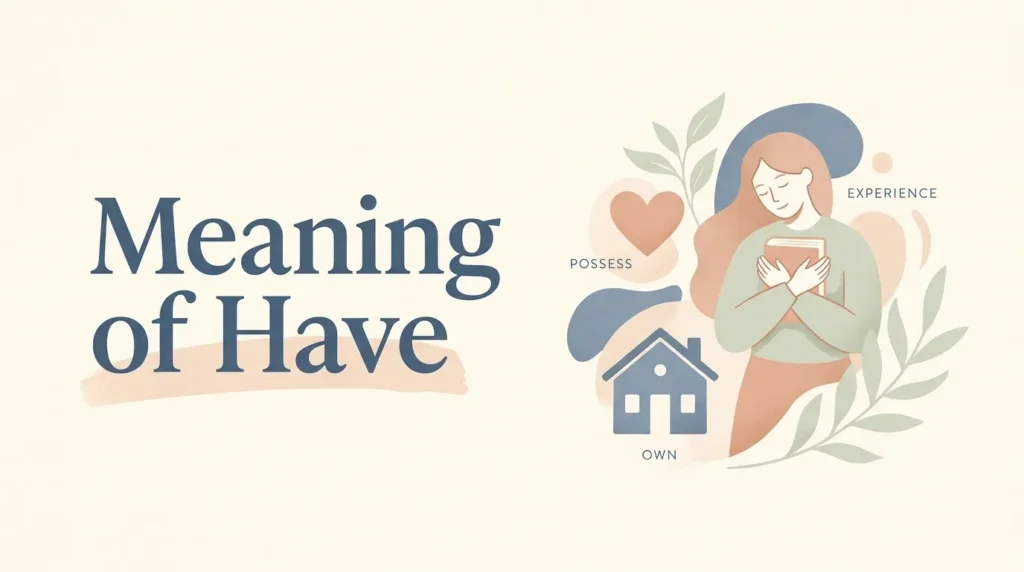
Meaning of Have
Definition
Have (verb): To own, hold, possess, experience, receive, or be connected to something. It is also used as an auxiliary verb to form perfect tenses.
Examples
- I have a new notebook.
- They have a meeting every Monday.
- She has finished her homework.
Connotative Meaning
Connotation (the feeling or idea linked to a word beyond its basic meaning) depends on how have is used.
- Positive tone: “We have a wonderful opportunity” suggests something valuable.
- Negative tone: “I have a serious problem” expresses concern.
- Neutral tone: “I have two pencils” simply states a fact.
Etymology

The verb have comes from Old English habban, meaning to possess or hold. It is related to similar words in other Germanic languages.
- Old English (450 to 1100): Habban was used to mean possess, hold, or keep.
- Middle English (1100 to 1500): The form changed over time to have, while its uses expanded.
- Modern English (1500 to present): Have became a central verb for possession, experiences, relationships, and auxiliary grammar.
Pronunciation (IPA)
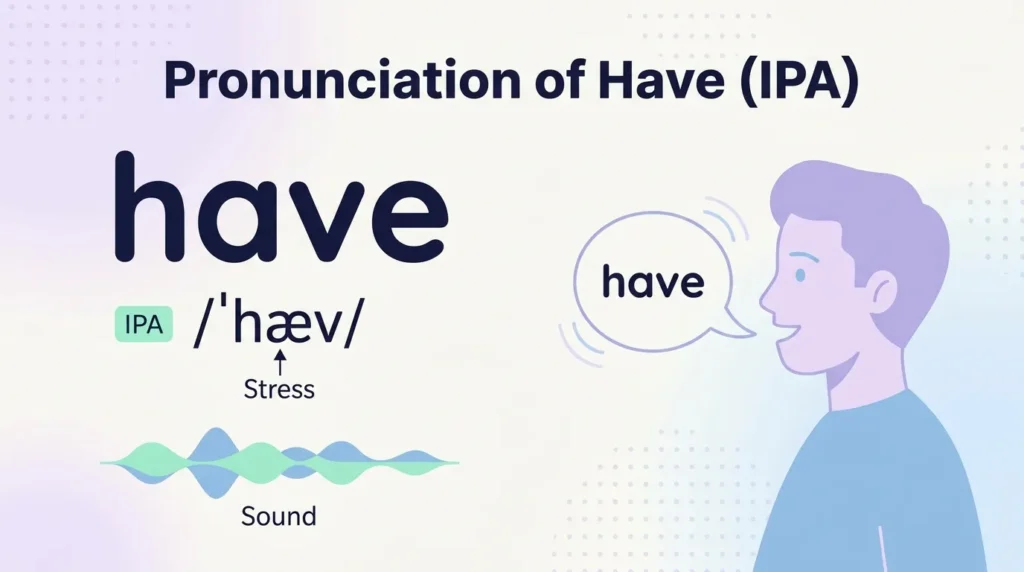
- IPA: /hæv/
- Syllables: One syllable
- Stress: The word has one syllable, so no separate stress pattern is needed.
In natural speech, the vowel in have may sound shorter in unstressed phrases, such as “I have to go.”
Affixation Pattern of Have
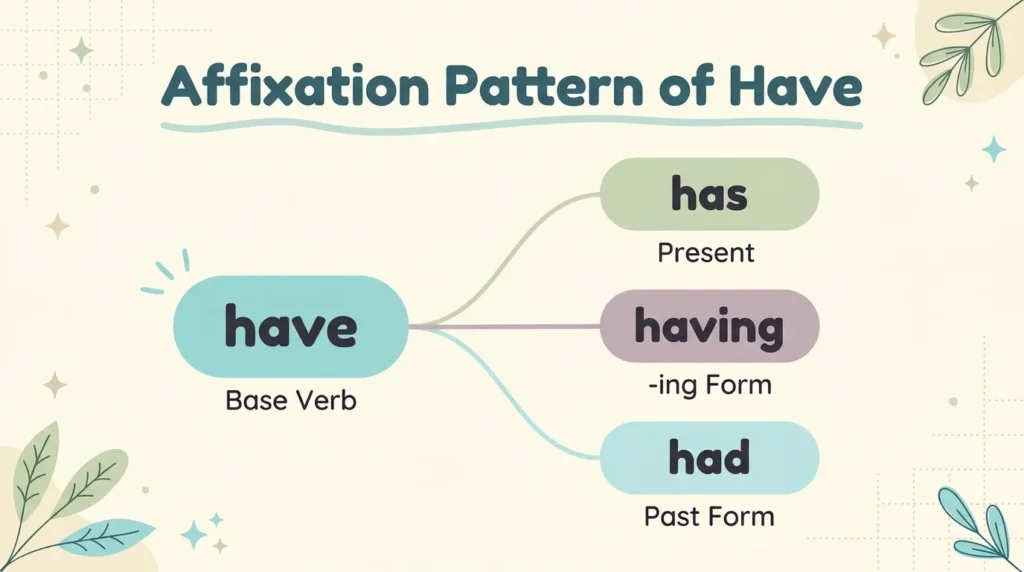
- Root: Have
- Prefix: None
- Suffix: The verb changes form with endings such as -s and -ing. The past form had is irregular.
- Word formations and related forms:
- Have (verb): Own, experience, or possess something.
- Has (verb): Present-tense form used with he, she, or it.
- Had (verb): Past-tense and past-participle form.
- Having (verb or gerund): The act of possessing or experiencing something.
- Have (noun, informal): A person or group with wealth or resources, as in “the haves and have-nots.”
- Have-not (noun): A person or group lacking wealth or resources.
- Have-to (modal-like expression): Expresses necessity, as in “I have to leave.”
27 Other Words for Have With Meaning and Examples
The best synonym depends on what have means in a sentence. Some alternatives describe ownership, while others refer to experiences, contents, or getting something.
1. Own (Verb)
Meaning: To have something as your property.
Examples:
- They own a small house.
- I own two bicycles.
2. Possess (Verb)
Meaning: To have or own something.
Examples:
- She possesses great patience.
- The museum possesses a rare painting.
3. Hold (Verb)
Meaning: To keep something in your hands or maintain control of it.
Examples:
- He holds a glass of water.
- She holds a senior position at the company.
4. Keep (Verb)
Meaning: To continue to have or retain something.
Examples:
- You can keep this book.
- He keeps all his old letters.
5. Contain (Verb)
Meaning: To have something inside or as part of a whole.
Examples:
- This bottle contains fresh juice.
- The report contains useful information.
6. Include (Verb)
Meaning: To have something as one part of a group or whole.
Examples:
- The price includes breakfast.
- The course includes three practical lessons.
7. Feature (Verb)
Meaning: To have something as a noticeable or important part.
Examples:
- The phone features a bright screen.
- The article features several expert opinions.
8. Involve (Verb)
Meaning: To include someone or something as part of an activity or situation.
Examples:
- The project involves several students.
- The job involves regular travel.
9. Experience (Verb)
Meaning: To feel, face, or go through an event or situation.
Examples:
- We experienced heavy rain yesterday.
- She experienced a great sense of relief.
10. Undergo (Verb)
Meaning: To go through a process, change, or treatment.
Examples:
- He will undergo medical tests.
- The building underwent major repairs.
11. Enjoy (Verb)
Meaning: To get pleasure from something or take part in it with pleasure.
Examples:
- We enjoyed a lovely dinner.
- She enjoys a good relationship with her neighbors.
12. Receive (Verb)
Meaning: To get something given, sent, or offered to you.
Examples:
- I received a letter from my cousin.
- They received good news this morning.
13. Obtain (Verb)
Meaning: To get something, often through effort or a process.
Examples:
- You must obtain permission first.
- She obtained a copy of the report.
14. Acquire (Verb)
Meaning: To gain or get something over time.
Examples:
- He acquired new skills at work.
- The library acquired several rare books.
15. Gain (Verb)
Meaning: To get or develop something useful or valuable.
Examples:
- She gained experience through volunteering.
- We gained a better understanding of the topic.
16. Get (Verb)
Meaning: To receive, obtain, or come to have something.
Examples:
- I got a message from my teacher.
- They got permission to enter.
17. Maintain (Verb)
Meaning: To keep something at a particular level or in a certain condition.
Examples:
- She maintains a healthy lifestyle.
- The team maintains high standards.
18. Retain (Verb)
Meaning: To continue to have or keep something.
Examples:
- The company retained its best employees.
- This material retains heat well.
19. Carry (Verb)
Meaning: To have something with you or transport it.
Examples:
- I always carry a notebook.
- The shop carries several local brands.
20. Bear (Verb)
Meaning: To have or carry a responsibility, burden, or quality.
Examples:
- She bears a great responsibility.
- The decision bears serious consequences.
21. Possess as a Quality: Exhibit (Verb)
Meaning: To show or display a quality or behavior.
Examples:
- The student exhibits strong leadership skills.
- The painting exhibits remarkable detail.
22. Enjoy Access to (Verb Phrase)
Meaning: To be able to use or enter something.
Examples:
- Students have access to the online library.
- Members enjoy access to special resources.
23. Be Equipped With (Verb Phrase)
Meaning: To have the tools, features, or resources needed for a purpose.
Examples:
- The lab is equipped with modern tools.
- The car is equipped with safety features.
24. Be Blessed With (Verb Phrase)
Meaning: To have something valued or seen as a good fortune.
Examples:
- She is blessed with a kind family.
- The town is blessed with beautiful scenery.
25. Be Endowed With (Verb Phrase)
Meaning: To naturally have a special quality, ability, or gift.
Examples:
- He is endowed with a strong memory.
- The region is endowed with rich natural resources.
26. Command (Verb)
Meaning: To have authority, respect, or attention.
Examples:
- She commands great respect from her team.
- The speaker commanded everyone’s attention.
27. Enjoy Possession of (Verb Phrase)
Meaning: To own or have something, often in a formal style.
Examples:
- The family enjoys possession of a valuable collection.
- The organization enjoys possession of several historic records.
Prototype Meaning
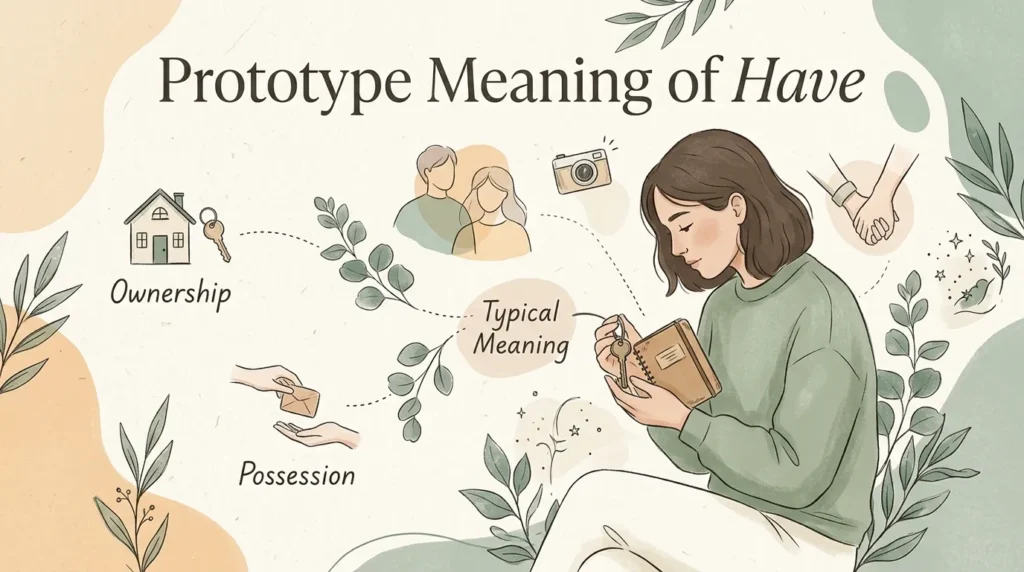
The most typical meaning of have is to possess or hold something. When people hear the word, they may first think of having a home, a phone, or a personal item. However, English uses have in many other ways. We can have a meal, have a problem, have a feeling, or have an appointment. It can also act as an auxiliary verb in sentences such as “They have arrived.” Understanding the context is important because words like own, experience, and receive only replace have in certain situations.
Prototype Categorization
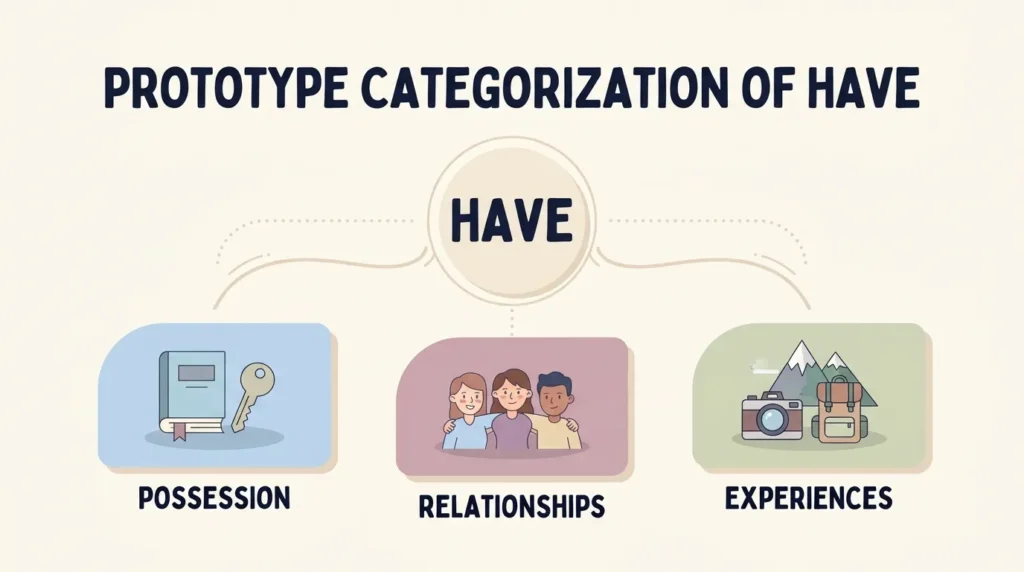
Grouping alternatives by meaning helps you choose the most accurate word for each sentence.
- Ownership and possession: Own, possess, hold, keep, retain. These words focus on having or keeping something.
- Contents and features: Contain, include, feature, involve. These describe what something has as part of a whole.
- Experiences and events: Experience, undergo, enjoy. These fit situations, feelings, events, and activities.
- Getting or developing something: Receive, obtain, acquire, gain, get. These emphasize how something comes into your possession or develops.
- Keeping a condition or carrying something: Maintain, carry, bear. These fit standards, objects, duties, or burdens.
- Qualities and abilities: Exhibit, be blessed with, be endowed with. These describe qualities, strengths, or gifts.
- Access and resources: Enjoy access to, be equipped with. These describe available facilities, tools, or opportunities.
- Authority and formal possession: Command, enjoy possession of. These fit respect, attention, ownership, and formal writing.
Antonyms of Have
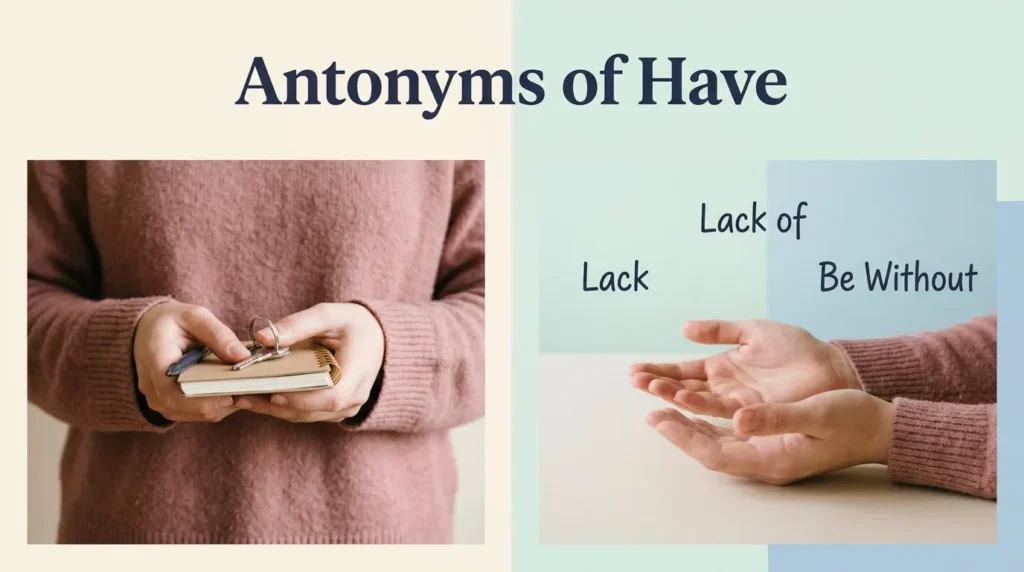
There is no single antonym for every use of have. The best opposite depends on the meaning.
1. Lack (Verb)
Meaning: To not have something needed or wanted.
Example: The team lacks the resources to finish the project.
2. Lose (Verb)
Meaning: To stop having something you once had.
Example: He lost his keys on the way home.
3. Surrender (Verb)
Meaning: To give something up or hand it over.
Example: She surrendered her membership card.
4. Give Away (Verb Phrase)
Meaning: To give something to another person without expecting payment.
Example: They gave away their old furniture.
5. Be Without (Verb Phrase)
Meaning: To not have or possess something.
Example: The village was without clean water for several days.
6. Forfeit (Verb)
Meaning: To lose or give up something as a result of a rule or action.
Example: The player forfeited the prize after breaking the rules.
Short Questions and Answers
What does have mean?
Have can mean to own, possess, experience, receive, or include something. It also helps form perfect tenses.
When should have be used?
Use have to talk about possession, experiences, relationships, events, and certain grammatical structures. Choose a synonym when it expresses your meaning more clearly.
Is have positive or negative?
Have is usually neutral. Its tone depends on the words around it. Having an opportunity sounds positive, while having a problem may sound negative.
How is have different from similar words?
Own usually means legal or personal possession. Receive means getting something from another source. Experience refers to going through an event or feeling, while contain means something is inside a whole.
Conclusion
Learning another word for have can help you express ideas with greater accuracy. Words such as own and possess describe ownership, while experience and undergo describe events or situations. Alternatives like contain and include help explain the parts of something, and words such as gain and acquire focus on getting or developing something. The right choice depends on the sentence and the meaning you want to share.
To improve your English, practice replacing have with a suitable alternative in short sentences. Read examples, check the grammar, and notice how each word is used. Daily practice can expand your vocabulary, reduce repetition, and build confidence in both speaking and writing.
Another Word for Provide: 30 Useful Alternatives

I’m Mubashra Waleed, a content writer specializing in English vocabulary, synonyms, word meanings. I focus on creating clear, accurate, and engaging content that makes English language learning simple and useful for readers.